The EU-India MOU: A Strategic Handshake Reshaping Global Dynamics
In the ever-evolving tapestry of global geopolitics and trade, a new chapter is being written. The recent Memorandum of Understanding (MOU) between the European Union (EU) and India is more than just a diplomatic formality—it’s a strategic alignment with far-reaching implications. As two of the world’s largest democratic blocs and economies, this partnership promises to recalibrate everything from supply chains to geopolitical alliances. Let’s unpack the key impacts of this landmark agreement.
1. The Indian Economy: A Catalyst for Growth and Innovation
For India, this MOU arrives at a pivotal moment. The agreement is expected to act as a powerful catalyst across multiple sectors:
- Investment & Infrastructure: Expect a surge in European Foreign Direct Investment (FDI), particularly in sustainable infrastructure, green technology, and digital innovation. This aligns perfectly with India’s ambitions for its “Make in India” and “Smart Cities” missions.
- Technology & Skills Transfer: Enhanced cooperation in areas like artificial intelligence, cybersecurity, and clean energy will accelerate technology transfer and upskill India’s vast workforce, boosting productivity and creating high-quality jobs.
- Agricultural & Pharma Boost: Improved market access for Indian agricultural products (like fruits, spices, and rice) and a mutual recognition of pharmaceutical standards can significantly benefit these key Indian industries.
- The Green Transition: With EU expertise and financing, India’s transition to renewable energy and a circular economy could accelerate, opening new economic avenues while addressing climate imperatives.
The Bottom Line: The MOU could be a game-changer for India’s economic trajectory, fostering a more innovation-led, sustainable, and globally integrated economy. However, the onus will be on Indian policymakers and businesses to adapt to stringent EU standards on data privacy, environmental norms, and labor regulations.
2. International Relations: Forging a Democratic Counterweight
Geopolitically, this partnership sends a powerful signal. In an era defined by US-China tensions and global instability, the EU-India axis represents a consolidation of democratic values and strategic autonomy.
- Beyond the China Calculus: While not explicitly stated, the partnership offers both blocs a pathway to diversify supply chains away from over-reliance on China, enhancing economic resilience.
- A Multipolar Anchor: This MOU strengthens the concept of a multipolar world where alliances are built on shared rules and values rather than sheer power politics. It enhances India’s standing as a leading voice of the Global South in dialogue with a developed bloc.
- Security & Maritime Cooperation: Look for deeper collaboration in maritime security in the Indo-Pacific, cybersecurity, and counter-terrorism, adding a crucial strategic dimension to the economic ties.
The Bottom Line: The relationship moves from being largely transactional to a broader strategic partnership. It empowers both the EU and India to navigate global challenges with greater collective influence, promoting a rules-based international order.
3. Global Trade: Rewriting the Rulebook
The MOU is a stepping stone toward a comprehensive EU-India Free Trade Agreement (FTA), negotiations for which have been reignited. Its impact on global trade is profound:
- New Trade Corridors: It will incentivize the development of new, resilient trade and supply chain corridors, potentially bypassing traditional chokepoints.
- Standards-Setting Power: Together, the EU and India represent nearly 2 billion people. Their collaboration on digital standards, data governance, and sustainability norms could set de facto global benchmarks, challenging other regulatory models.
- A Boost for Multilateralism: At a time when protectionism is rising, this pact is a strong endorsement of open, fair, and rules-based trade. It could inject new momentum into stalled multilateral forums like the WTO.
The Bottom Line: The EU-India corridor has the potential to become one of the world’s most significant trade axes. By combining India’s demographic heft and growing market with the EU’s technological prowess and regulatory influence, they can shape the future of global commerce.
4. The “Mother of All Trades”: A New Digital & Green Corridor
This MOU has the potential to become the “Mother of All Trades“—not just in volume, but in scope and foundational impact. It moves beyond traditional goods to establish the pillars of 21st-century commerce:
- The Digital Bridge: A key focus is on creating interoperable digital ecosystems. Cooperation on trusted data flows, AI ethics, and digital public infrastructure (like India’s revolutionary UPI and Aadhaar systems) could create a template for secure, inclusive global digital trade.
- The Green Alliance: This partnership is arguably the most significant green trade alliance in the making. It links the EU’s Green Deal and Carbon Border Adjustment Mechanism (CBAM) with India’s ambitious renewable energy targets. Collaboration on green hydrogen, sustainable finance, and circular economy models will define new markets.
- Knowledge & Talent as Currency: The MOU emphasizes research, innovation, and mobility. By creating frameworks for student exchanges, joint research in critical technologies, and easier professional mobility, it treats knowledge and talent as the ultimate trade commodities.
The Bottom Line: The “Mother of All Trades” concept here signifies a holistic partnership building the very architecture for future trade—digital, green, and knowledge-based. It’s about writing the rulebook, not just trading within an existing one.
The Road Ahead: Challenges and Opportunities
The promise is immense, but the path isn’t without hurdles. Key challenges include bridging differences on data localization, intellectual property rights, and tariff reductions. The success of this MOU will depend on continuous dialogue, mutual compromise, and a shared vision.
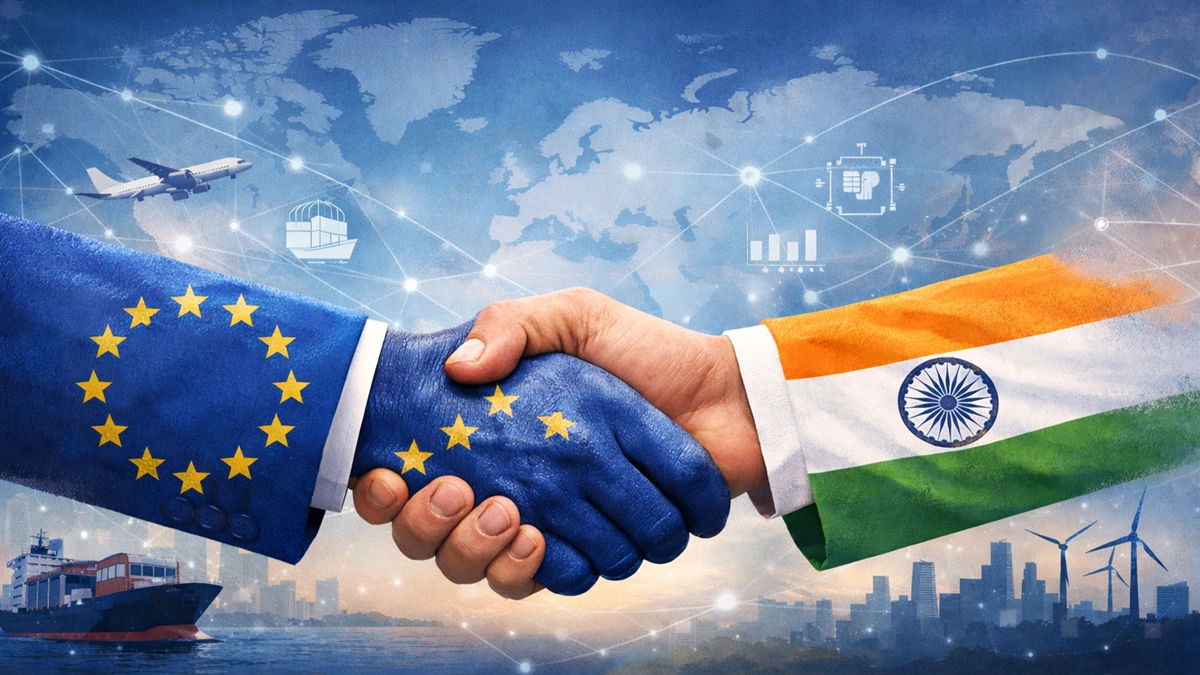
In conclusion, the EU-India MOU is a landmark moment. It’s a recognition that in the 21st century, strategic partnerships are built on shared digital futures, green transitions, and democratic resilience. More than a trade deal, it aspires to be the “Mother of All Trades”—a foundational framework for the next era of globalization. For businesses, investors, and citizens on both sides, this is the opening of a new corridor of opportunity—one that could define the next decade of global economics and politics. The world is watching, and if implemented with foresight, this handshake across continents could indeed shape a new world order.
Dr. M Samir Gopalan, Faculty Member Silver Oak Institute of Business Management, Silver Oak College of Liberal Studies, Silver Oak University.