The IndiGo Crisis: When Efficiency Meets Fragility – A Service Operations Management Case Study
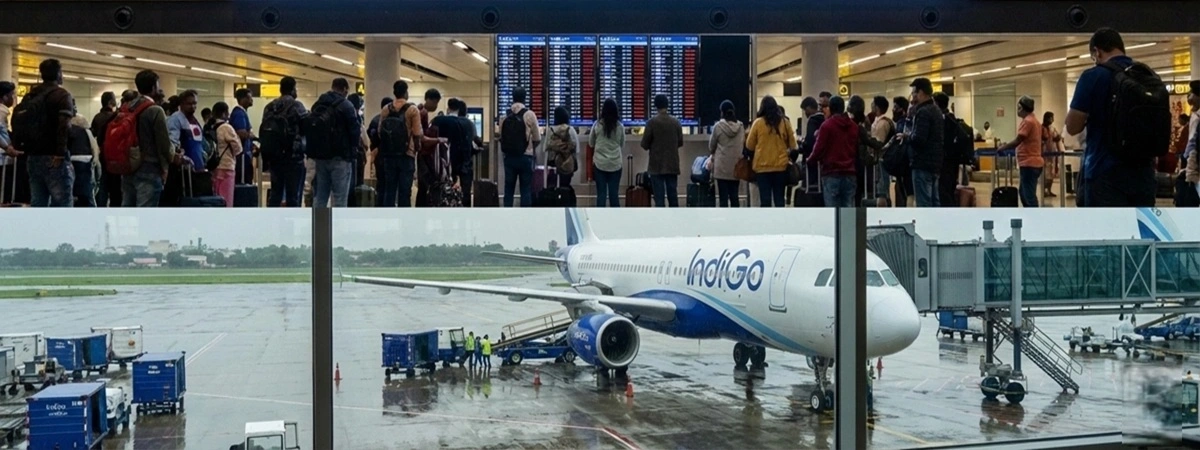
For years, IndiGo was the undisputed gold standard in Indian aviation. For Post Graduate Diploma in Management (PGDM) students, it was a textbook case of operational excellence: a single aircraft type for reduced maintenance complexity, ruthless on-time performance, and a lean cost structure that drove profitability in a brutal industry. Its dominance, nearing 60% of the domestic market, seemed unassailable. Then came the perfect storm—a cascade of flight delays, cancellations, and chaotic customer experiences that laid bare the hidden fragilities in its model. The recent “IndiGo crisis” is not merely a public relations hiccup; it is a profound lesson in Service Operations Management (SOM) failure, offering critical implications for future managers. It also exposes the systemic risks of monopolistic market structures, the complex role of the regulator, and the ugly underbelly of competition—or the lack thereof—revealed through predatory dynamic pricing.
Deconstructing the Service Operations Breakdown
At its core, service operations management is the art of designing, executing, and controlling the systems that deliver services efficiently and effectively. IndiGo’s system, optimized for fair-weather conditions, cracked under pressure.
- The Resilience Gap in Capacity Planning: IndiGo’s model relied on ultra-high aircraft utilization. The grounding of a significant portion of its A320 Neo fleet due to Pratt & Whitney engine issues was a known risk that materialized. The operations system lacked sufficient slack or buffer capacity. Rigid optimization left no room for redundancy, turning a supply-chain problem into a full-blown service collapse.
- Systemic Communication & Process Failure: Service recovery is a critical SOM capability. When flights were cancelled, the processes for re-accommodating passengers broke down. This indicates a failure in integrating front-stage (customer-facing) and back-stage (support) operations. The IT systems, crew scheduling algorithms, and ground-handling protocols failed to scale and communicate under stress.
- The Human Resource Strain: An operation running at 99% efficiency places immense strain on human resources. Reports of fatigued crews and overwhelmed ground staff point to a workforce management failure. The “human in the system” was treated as another variable to be optimized, not as a critical node for flexibility and problem-solving.
The Regulator’s Dilemma: A Spotlight on DGCA’s Role
The Directorate General of Civil Aviation (DGCA), as the sector regulator, found itself in a bind, highlighting the challenges of overseeing a dominant player. Its role expanded from a routine auditor to a crisis manager, revealing key limitations:
- Reactive vs. Proactive Oversight: The DGCA’s actions—issuing show-cause notices, directing airlines to comply with customer refund mandates—were largely reactive. The crisis sparked a debate: should the regulator have mandated more robust contingency planning and minimum buffer capacity for a player of IndiGo’s scale? The incident questions whether current regulations are equipped to handle the “too-big-to-fail” dynamic in a critical service industry.
- Enforcement in a Concentrated Market: Penalizing a carrier controlling 60% of the market is a double-edged sword. Heavy fines or operational curbs could inadvertently worsen passenger woes by reducing capacity further. This asymmetry weakens the regulator’s hand, allowing systemic issues to persist until they erupt into a crisis.
- The Consumer Protection Gap: While DGCA rules on cancellations and refunds are clear, their enforcement during a large-scale breakdown proved difficult. The regulator struggled to ensure real-time compliance, exposing a gap between policy on paper and ground-level execution during systemic failures.
Management Lessons for the PGDM Strategist
For aspiring managers, this crisis is a treasure trove of lessons:
- Efficiency vs. Resilience is the New Trade-Off: Building resilient supply chains and operational buffers is non-negotiable. Risk management must be integrated into core operations planning.
- Customer-Centricity is an Operations Function: Investing in robust Customer Relationship Management (CRM) systems, transparent communication protocols, and empowered frontline staff for service recovery is essential.
- Engage with Regulators Proactively: Smart management involves anticipating regulatory concerns and collaborating to shape frameworks that ensure stability and fair competition, rather than treating compliance as a box-ticking exercise.
The Monopolistic Market Pitfall: Systemic Risk & Exploitative Pricing
This crisis underscores the profound dangers of an over-concentrated market, which manifest in two critical ways:
- Single Point of Failure & Eroded Competition: When one player commands the majority of the market, its operational failure becomes a national infrastructure failure. Furthermore, competition, the primary driver of innovation and customer care, weakens. The incentive to maintain superior service and robust backup systems diminishes when market capture is already achieved.
- The Ugly Specter of Exploitative Dynamic Pricing: The most immediate symptom of failed competition was the behavior of other airlines. As thousands of IndiGo passengers scrambled for alternatives, competitors did not act as saviors but as opportunists. Dynamic pricing algorithms, freed from the restraint of meaningful competition, went into overdrive. Tickets on parallel routes saw exorbitant surges, effectively price-gouging a captive, distressed customer base.
This is not smart revenue management; it is a market failure. It reveals that in an oligopoly with one crippled giant, the remaining players can (and do) engage in rent-seeking behavior rather than competing on service or stepping up to meet societal need. It transforms a technical operations failure into a broader consumer welfare crisis, highlighting the absence of either ethical self-regulation or effective regulatory caps on fare surges during periods of abnormal disruption.
Implications for Managers: As future leaders, you must champion competitive ecosystems. Strategies should focus on competing through resilience and service, not just scale. This incident is a powerful argument for regulatory frameworks that:
- Mandate transparent and ethically bounded dynamic pricing models during systemic disruptions.
- Actively foster the growth of multiple healthy operators to ensure redundancy.
- Treat extreme market concentration as a systemic risk, not just a competition law issue.
Conclusion: Building Antifragile Systems in Balanced Markets
The IndiGo episode is a masterclass in interconnected failure: a breakdown in operations management, a stressed regulatory framework, and a market structure that multiplied consumer harm instead of mitigating it. For the PGDM student, the takeaway is multidimensional. The manager of the future must build antifragile organizations that value empathy and resilience as much as efficiency. Simultaneously, they must advocate for and operate within market structures where competition is vibrant and ethical, understanding that true leadership is demonstrated not in dominance, but in the ability to weather a storm without exploiting the vulnerability of both your customers and the market itself. The sky belongs to those who plan for turbulence, but a healthy ecosystem ensures passengers always have a safe, fairly-priced alternative runway.
The IndiGo Crisis: When Efficiency Meets Fragility – A Service Operations Management Case Study
For years, IndiGo was the undisputed gold standard in Indian aviation. In fact, for PGDM students, it was a textbook case of operational excellence: a single aircraft type for reduced maintenance complexity, ruthless on-time performance, and a lean cost structure that drives profitability in a brutal industry. Its dominance, nearing 60% of the domestic market, seemed unassailable. Then came the perfect storm—a
cascade of flight delays, cancellations, and chaotic customer experiences that laid bare the hidden fragilities in its model. The recent “IndiGo crisis” is not only a public relations hiccup but also a very important lesson in Service Operations Management (SOM) failure, with critical implications for future managers. It also brings into light the systemic risks of monopolistic market structures, the complex role of the regulator, and the ugly underbelly of competition—or the lack thereof—revealed through predatory dynamic pricing.
Deconstructing the Service Operations Breakdown
Service operations management is basically the art of designing, implementing, and controlling those processes that would accomplish the undertaking of the delivery of services in a seamless manner. IndiGo’s system, fine-tuned for fair-weather flying, cracked under pressure.
- The Resilience Gap in Capacity Planning: IndiGo’s model depended on ultra-high aircraft utilization. Grounding a substantial part of its A320 Neo fleet because of Pratt & Whitney engine issues was a risk that was well-known; it materialized. There was not enough slack or buffer capacity within the operations system. Rigid optimization allowed no room for redundancy, and hence, what was essentially a supply-chain problem turned into a full-scale service collapse.
- Systemic Communication & Process Failure: Service recovery is an important capability of the SOM. When flights were cancelled, the processes to re-accommodate passengers broke down. This is indicative of a failure in integrating front-stage (customer-facing) and back-stage (support) operations. The IT systems, crew scheduling algorithms, and ground-handling protocols failed to scale and communicate under stress.
- The Human Resource Strain: An operation running at 99% efficiency places human resources under immense stress. Reports of fatigued crews and overwhelmed ground staff point to a workforce management failure. The “human in the system” was treated as another variable to be optimized, not as a critical node for flexibility and problem-solving.
The Regulator’s Dilemma: A Spotlight on DGCA’s Role
As the sector regulator, the Directorate General of Civil Aviation found itself in a bind, highlighting the challenges of overseeing a dominant player. Its role expanded from being a routine auditor to a crisis manager, revealing key limitations:
- Reactive vs. Proactive Oversight: Most of the DGCA’s measures-show-cause notices, directing airlines to comply with customer refund requirements-were reactive in nature. The crisis has spurred debate on whether the regulator should have prescribed more stringent contingency planning and minimum buffer capacity for a player of IndiGo’s size. The incident questions whether current regulations are equipped to handle the “too-big-to-fail” dynamic in a critical service industry.
- Concentrated Market Enforcement: To penalize a carrier that holds 60% market share is a double-edged sword. Heavy fines or operational curbs might actually worsen passenger woes by reducing capacity further. This asymmetry weakens the regulator’s hand, allowing systemic issues to persist until they erupt into a crisis.
- The Consumer Protection Gap: Although the rules are very clear with respect to cancellations and refunds, their enforcement was difficult in case of a large-scale breakdown. The regulator is struggling to ensure real-time compliance, exposing a gap between policy on paper and the ground-level execution during systemic failures.
Management Lessons for the Strategists
For prospective managers, this crisis is a treasure trove of lessons:
- Efficiency vs Resilience is the New Trade-off: Building resilient supply chains and operational buffers is a non-negotiable fact. The risk management approach should be integrated into core operations planning.
- Customer-Centricity is an Operations Function: Robust investments in Customer Relationship Management systems, communication protocols that are open, and empowered staff on the front line to recover service are required.
- Proactive Involvement with Regulators: Intellectually nimble management that is proactive, anticipates regulatory concerns, and works collaboratively to define the framework for stability and fair competition, rather than box-ticking compliance.
The Monopolistic Market Pitfall: Systemic Risk & Exploitative Pricing
This crisis underlines the profound dangers of an over-concentrated market, manifesting in two critical ways:
- Single Point of Failure & Eroded Competition: When one player commands a majority of the market, its operational failure becomes a national infrastructure failure. Moreover, competition, which is usually the main stimulator for innovation and taking good care of customers, weakens. The incentive to maintain superior service and robust backup systems diminishes when the market capture is already achieved.
- The ugly specter of exploitative dynamic pricing: The most immediate symptom of failed competition was the behavior of other airlines. As thousands of IndiGo passengers scrambled for alternatives, competitors acted not as saviors but as opportunists. Dynamic pricing algorithms, freed from the restraint of meaningful competition, went into overdrive. Tickets on parallel routes saw exorbitant surges, effectively price-gouging a captive, distressed customer base.
- This is not smart revenue management; it is a market failure. It reveals that in an oligopoly with one crippled giant, the remaining players can (and do) engage in rent-seeking behaviour rather than competing on service or stepping up to meet societal need. It transforms a technical operations failure into a broader consumer welfare crisis, highlighting the absence of either ethical self-regulation or effective regulatory caps on fare surges during periods of abnormal disruption.
Managerial Implications: You, as the future leaders, should champion competitive ecosystems. The focus of the strategies should be on competing through resilience and service, not just through scale. This incident is a powerful argument for regulatory frameworks that:
- Require transparent and ethically bound dynamic pricing models in the case of systemic disruptions.
- Actively develop multiple healthy operators to achieve redundancy.
- Treat severe market concentration as a systemic risk, rather than purely a
- competition law issue.
Conclusion: Constructing Antifragile Systems in Balanced Markets
The IndiGo episode is a masterclass in interconnected failure: a breakdown in operations management, a stressed regulatory framework, and a market structure that multiplied consumer harm instead of mitigating it. For a Post Graduate Management student, the takeaway is multidimensional. The manager of the future must build antifragile organizations that value empathy and resilience as much as efficiency. Simultaneously, they must advocate for and operate within market structures where competition is vibrant and ethical, understanding that true leadership is demonstrated not in dominance, but in the ability to weather a storm without exploiting the vulnerability of both your customers and the market itself. The sky belongs to those who plan for turbulence, but a healthy ecosystem ensures passengers always have a safe, fairly-priced alternative runway.
Dr. M Samir Gopalan, Faculty @ Silver Oak Institute of Business Management – PGDM Program