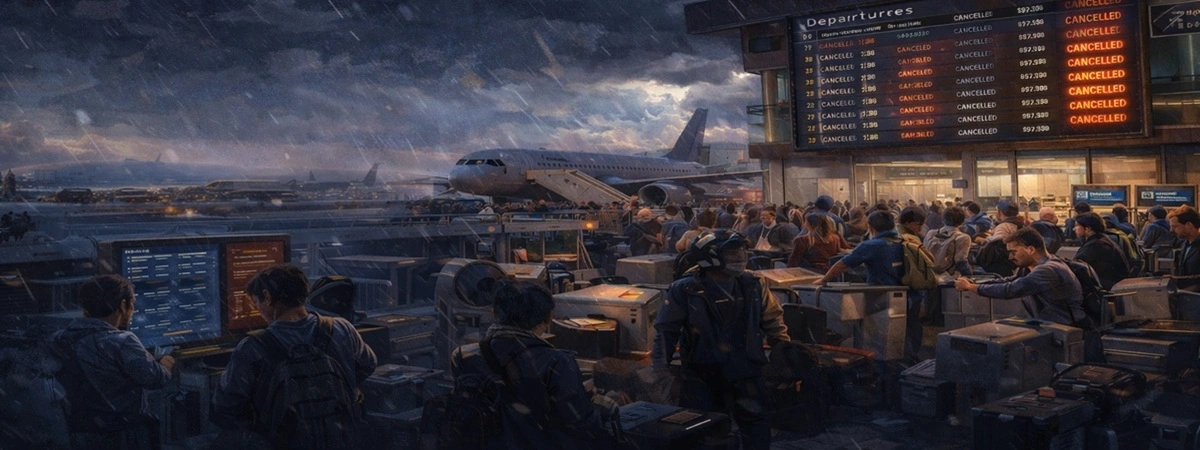
When Updates Backfire: An OM Case Study in Digital Transformation Gone Wrong: A Night of Operational Gridlock
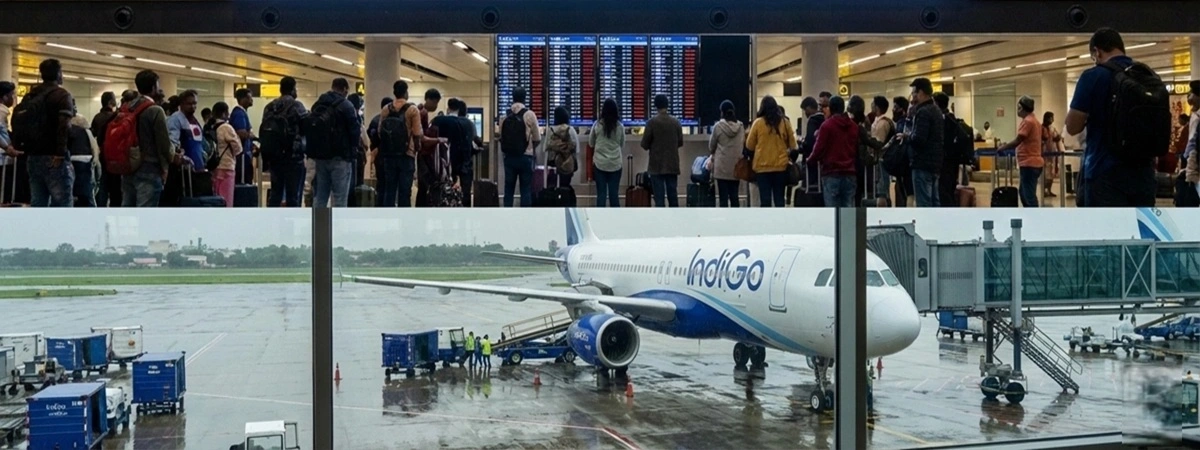
This week, major airports across Europe and Asia descended into chaos. Thousands of passengers were stranded, flights were cancelled, and airline operations came to a grinding halt. The culprit? Not a volcanic ash cloud, not a labour strike, and not a sudden storm, but a software update to the Airbus A320 family’s flight control systems. What was intended as a routine enhancement to safety and performance triggered a cascading failure, leaving airlines scrambling and passengers furious. For students of Operations Management, particularly in a PGDM curriculum, this is not just a news headline but a textbook case study unfolding in real-time. It encapsulates some very critical OM (Operations Management) themes: change management, risk mitigation, supply chain resilience, and how digital transformation presents profound challenges in service operations.
The Incident: A Breakdown in the “Digital Core”
The modern aircraft, particularly workhorse models like the A320, are nothing but flying data centers. Their operational performance is governed by millions of lines of code. Airbus issued a software update-a planned change to its complex technological system. When applied, discrepancies or potential safety flags were raised, which then caused aviation authorities to order immediate checks. This turned into a massive, unplanned grounding event.
From the point of view of OM (Operations Management), this incident represents a catastrophic failure at the intersection of Technology Management and Process Design. A software update process, which was one of the critical maintenance operations, did not have the required robustness to avoid single-point failure, bringing down a global network.
OM LENS 1: THE PERILS OF POOR CHANGE MANAGEMENT
A core tenet of OM (Operations Management) is managing change effectively. Whether introducing a new product line or updating a software system, the principles are similar:
- Testing and Validation: Was the update tested in a sufficiently robust simulated environment that mirrored the vast heterogeneity of global airline configurations, maintenance histories, and operational conditions? The incident suggests a gap.
- Phased Roll-out: The most basic strategy from OM for the implementation of new processes is a phased or pilot approach. A concurrent global roll-out of a critical update maximizes risk. Could a region-by-region or airline-by-airline deployment have contained the failure?
- Rollback Protocols: Any system change should have a properly defined, tested, and speedy rollback plan. The extent of the grounding suggests that rolling back-also known as reverting to the old software-wasn’t a quick, standardized procedure, but a time-consuming, aircraft-by-aircraft diagnosis.
OM Lens 2: RISK MANAGEMENT AND SYSTEM VULNERABILITY
This case was a stark lesson in risk assessment. Generally, airlines and manufacturers prepare for physical disruptions, such as engine failure and poor weather; this event has pointed out a growing, systemic vulnerability: digital dependency.
- Single Point of Failure: The commonality of the A320 fleet, usually a strength for efficiency-common parts and pilot certifications-became a weakness. When there was a fault in one common digital component, hundreds of aircraft went down across multiple airlines simultaneously.
- Contingency Planning: OM stresses the need for contingency plans. Did airline operations centers have actionable playbooks for a “mass software fault grounding”? The passenger Stranded Passengers crisis suggests that recovery plans were inadequate and that weaknesses existed in service recovery and customer relationship management processes.
OM Lens 3: SUPPLY CHAIN & CAPACITY SHOCK
An airline’s operation is a tightly synchronized flow of assets-aircraft, crews, and gates. The sudden, simultaneous removal of dozens of A320s from service was a massive negative capacity shock.
- Resource Bottlenecks: Bottlenecks immediately formed not at runways but at maintenance bays and with qualified engineers who could perform the mandated checks. This is a classic constraint management issue.
- Network Collapse: The disruption cascaded across the network – through hub and spoke systems. A grounded A320 in Frankfurt doesn’t cancel its Frankfurt-Berlin flight but also cancels the subsequent Frankfurt-New York flight due to lack of aircraft. And scheduling and routing system-a marvel of OM optimization-was completely destabilized.
- Crew Logistics: The crews were stranded out of position, creating further scheduling nightmares and compounding the operational meltdown.
Managerial Implications: This incident is rich with lessons for any future manager:
- Digital is Physical: In the contemporary context, software lies at the heart of operations; it is not a support function. Similarly, OM strategies need to treat digital updates with the same rigor as changes to physical assembly lines.
- Robustness over Pure Efficiency: The relentless OM pursuit of efficiency (maximizing aircraft utilization, minimizing spare aircraft) can reduce resilience. This event argues for building buffers-digital and physical-and designing for fail-safety in critical systems.
- End-to-End Process Ownership: Airbus’s engineering team had to manage the update process as an integrated process that included airline IT, maintenance operations, regulator coordination, and passenger communication. It couldn’t be viewed in isolation.
- The Human Element in Tech-Ops: Ultimately, recovery had to rely on skilled engineers manually checking the aircraft. It underlines the fact that human expertise and decision-making remain the critical backup in automated systems.
A Modern OM Crucible
The A320 software crisis represents a 21st-century operations failure. It pushes the classic OM problems of capacity, variability, and process reliability into the digital domain. It shows that in an era of digital transformation, Operations Management (OM) is more crucial than ever. The job of today’s PGDM student and tomorrow’s manager is to build systems that are not just smart and efficient but also antifragile-capable of withstanding and learning from shocks in an interconnected, software-driven world. The stranded passengers are a powerful reminder that behind every slick app and automated system, the fundamentals of sound operations management remain the arbiters of success or failure.
By: Dr. M Samir Gopalan